
What matters in practice
The texture can be a useful part of the conversation, but it is not a universal answer to every traction question. The right amount of texture depends on how the room is used, whether the floor is routinely wet, how it will be cleaned and what equipment or footwear moves through it. We would rather match the profile to the actual environment than sell “non-slip” as a magic promise.
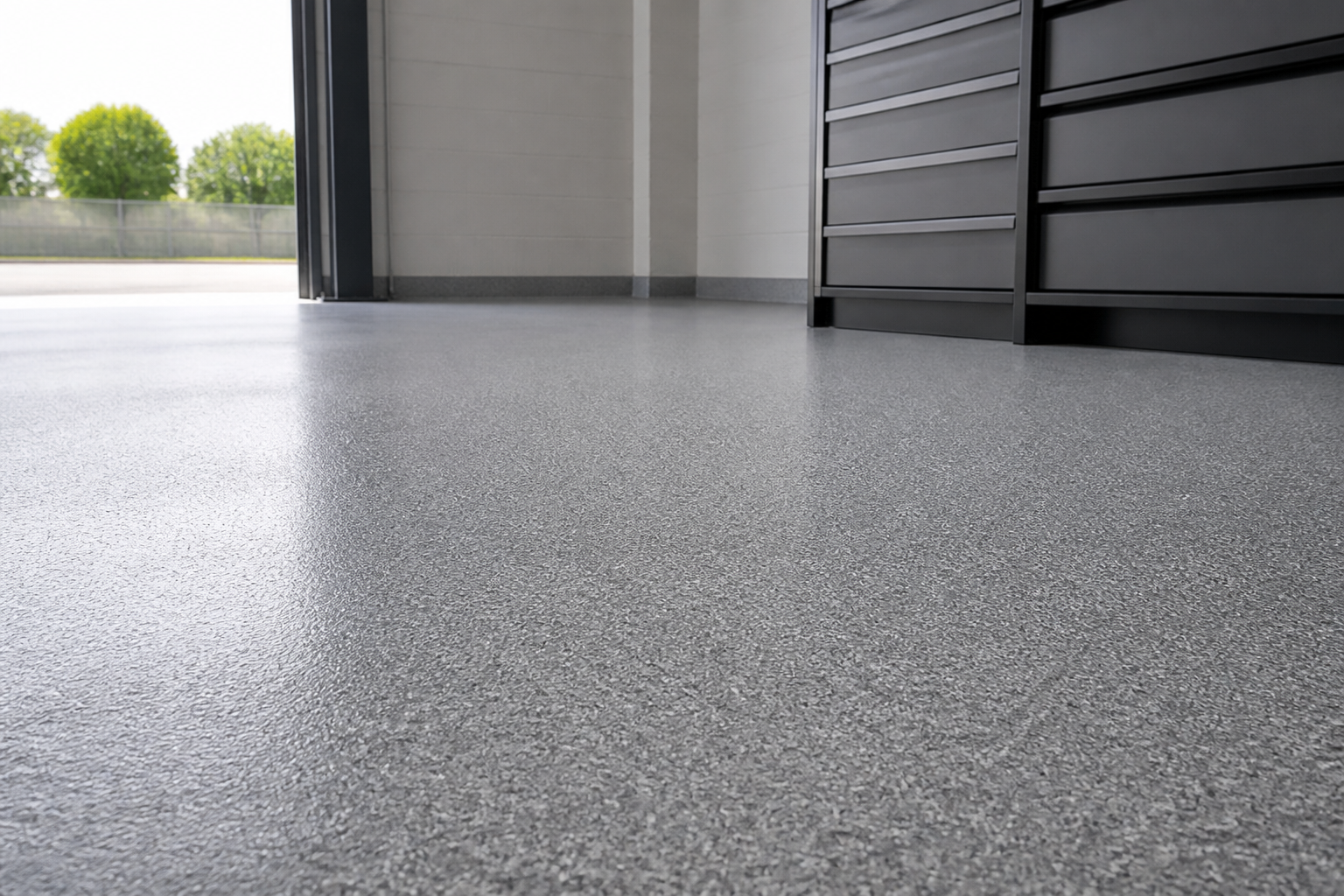
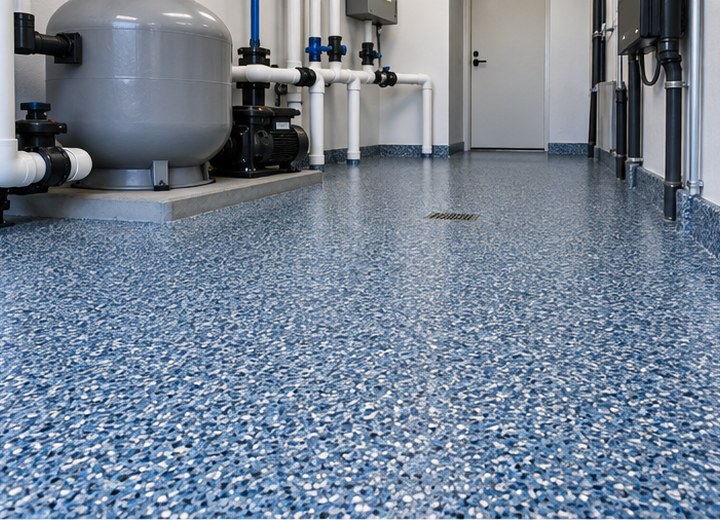
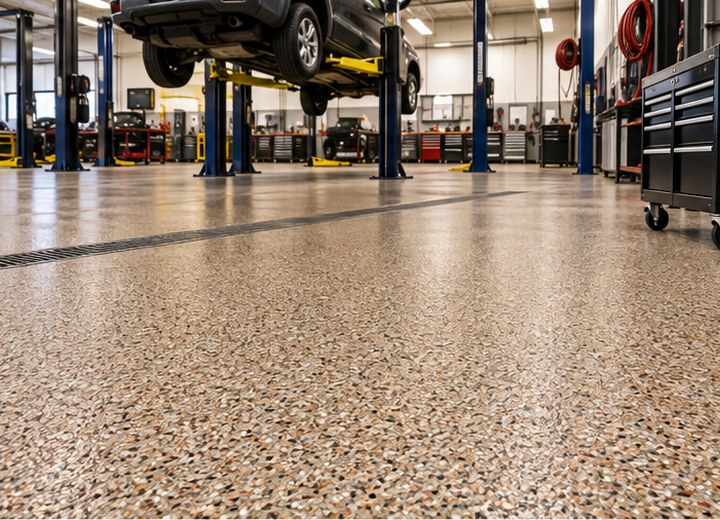
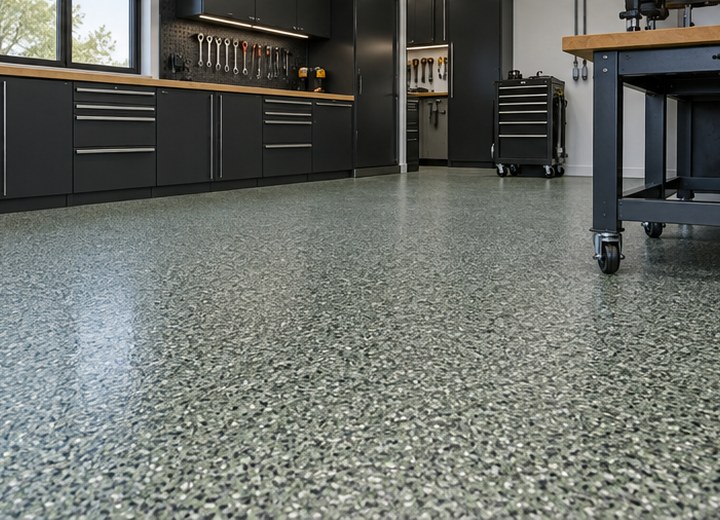
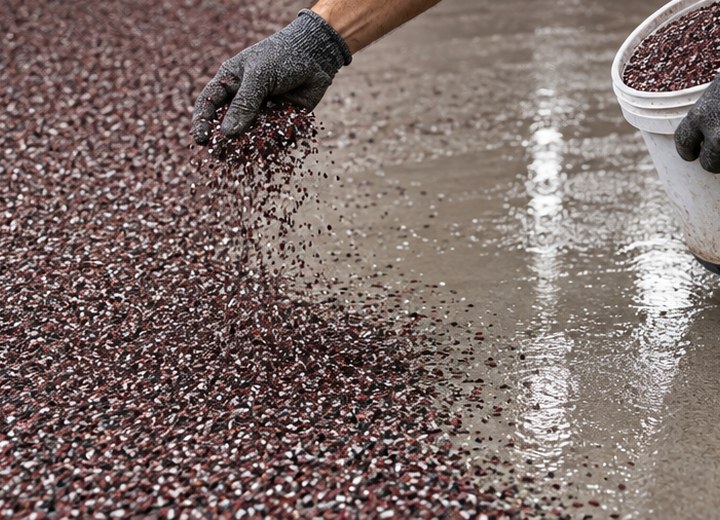
Quartz also gives a cleaner, more controlled visual result than a highly varied flake blend. Neutral greys, soft beiges and darker workhorse colours can be built into a design that feels professional without being cold. That can be a great fit when you want something more refined than raw concrete but less expressive than metallic epoxy.
Preparation still determines whether the system performs. The slab has to be assessed, mechanically profiled and repaired where necessary before the decorative aggregate becomes part of the build. Existing coatings, contamination, moisture and damaged edges all affect the recommended plan.
If the space is a busy garage, service bay, workshop or commercial area, include that in the first conversation. A few photos, square footage and a description of the traffic help us decide whether quartz belongs on the short list or whether another system will serve the space better.