Plan your Windsor–Essex floor. Send photos for a quote conversation. Visits by appointment.
PLAN YOUR WINDSOR–ESSEX FLOOR✦SEND PHOTOS FOR A QUOTE CONVERSATION✦VISITS BY APPOINTMENT✦PLAN YOUR WINDSOR–ESSEX FLOOR✦SEND PHOTOS FOR A QUOTE CONVERSATION✦VISITS BY APPOINTMENT✦
One practical starting point for concrete condition, preparation, epoxy and polyaspartic layers, full flake, cost, timing, winter use, care and quote comparison.
By Rose City Customs — The Epoxy Lab™
The complete plan connects the slab, system, finish and daily use.
THE 30-SECOND ANSWER
A dependable garage floor begins with the slab, not the colour chart. Before selecting epoxy, polyaspartic, decorative flake or another finish, identify old coatings, contamination, cracks, pits, drains, slopes, moisture clues and how the garage is actually used.
VISUAL GUIDE
The complete decision path
Use this order to move from a rough idea to a reviewable floor scope.
01
Read the slab
Document cracks, pits, coatings, contamination, moisture clues, drains and edges.
02
Define the room
Vehicles, storage, tools, gym equipment, customers and cleaning shape the requirements.
03
Choose the system
Match preparation, repairs, base, decorative layer, topcoat and texture.
04
Choose the look
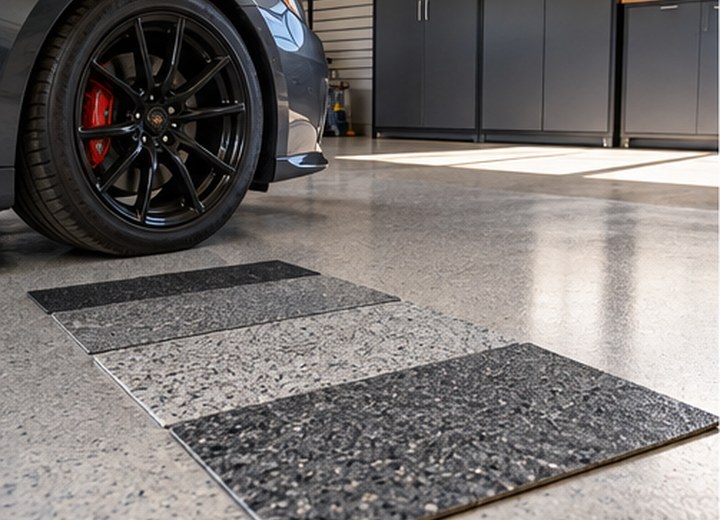
Compare physical samples with the actual walls, light, cabinets and vehicles.
05
Compare the scope
Review price, exclusions, schedule, deposit, validity, warranty and change process.
06
Plan the handoff
Confirm return-to-service milestones, care instructions and project records.
What matters in practice
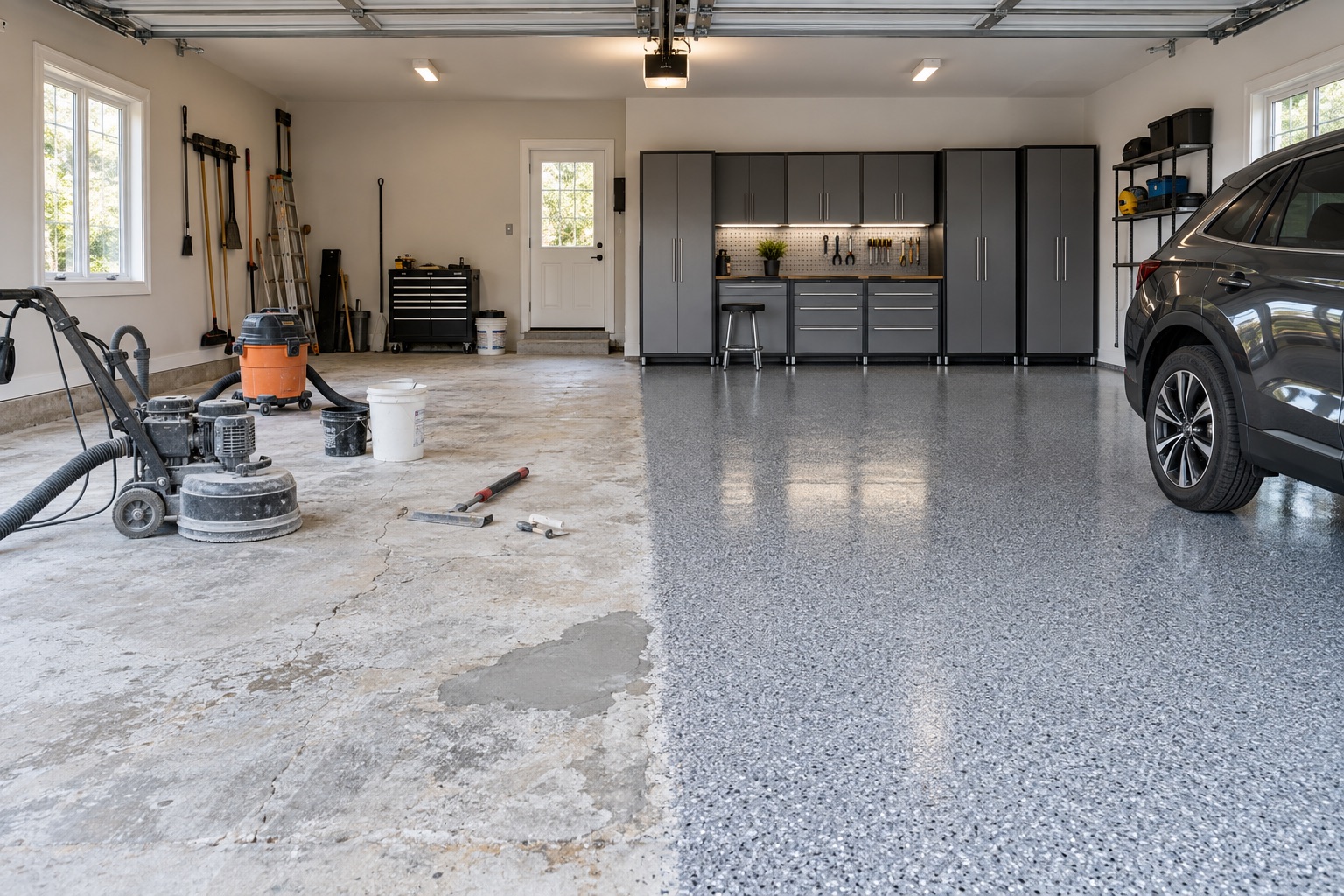
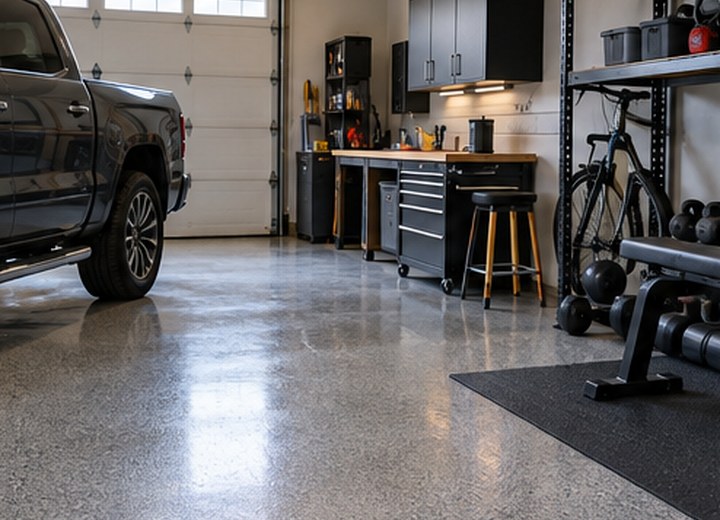
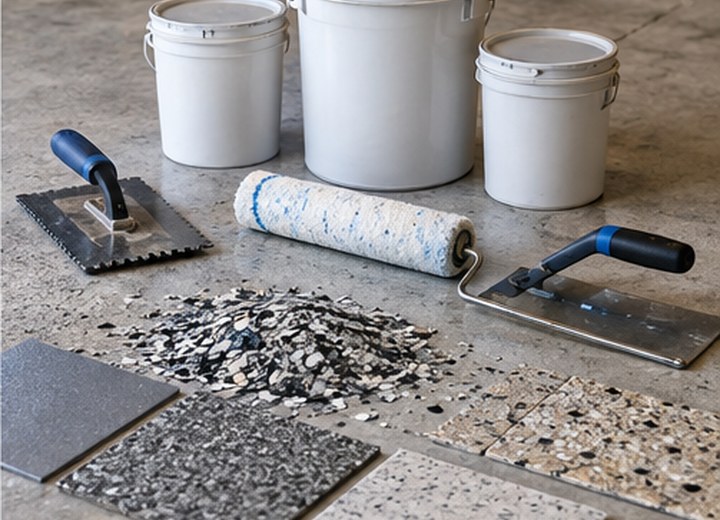
Mechanical preparation creates the surface the system needs. Repairs and edge details are completed after weak material is exposed, then compatible layers are selected for the concrete, environment, traffic and design. A full-flake system commonly combines a pigmented base, dense decorative broadcast and protective clear topcoat.
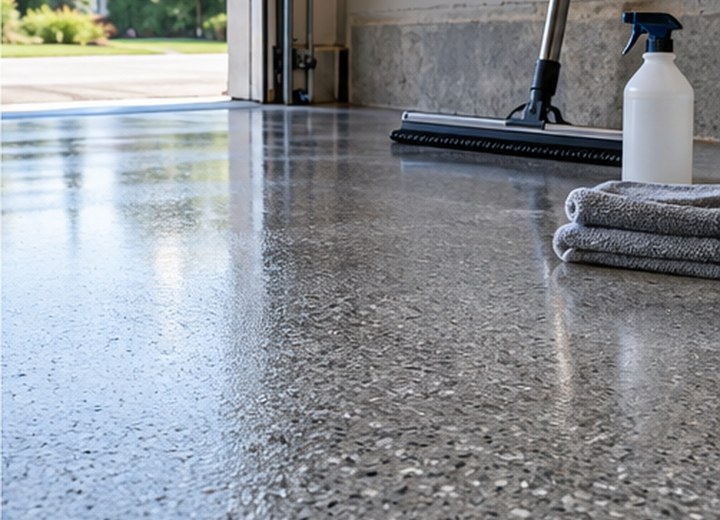
Windsor–Essex garages add real winter demands: road salt, slush, grit, wet tire paths and temperature changes. A sealed floor is easier to clean, but the finish, texture, drains and maintenance plan still need to match the room.
Use price ranges to plan, then compare written scopes. The quote should explain preparation, repairs, system layers, exclusions, timing, deposit, validity, warranty and what happens if hidden slab conditions appear. Photos and dimensions make the first conversation much more useful.
Start with five useful photos
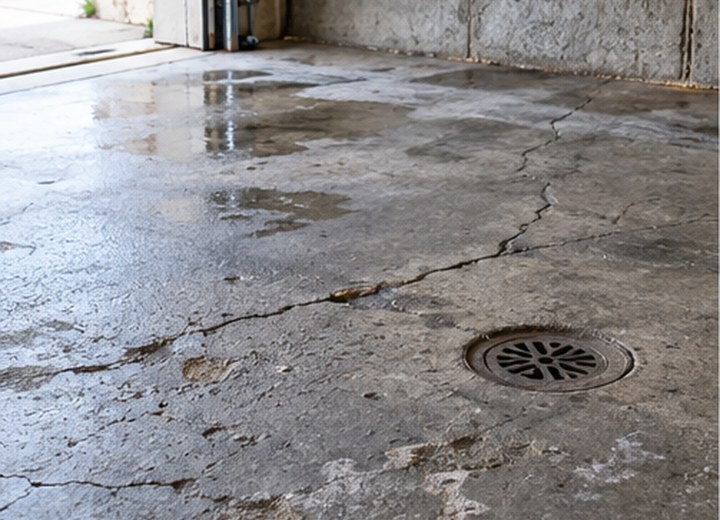
Take one photo from the driveway, one from the back wall, one of the full floor, and close-ups of the worst damage and any drain or threshold. Add approximate length and width plus a short description of how the garage is used.
Whole room from the door
Whole room from the back wall
Worst crack, pit or old coating
Drain, slope or pooling area
Threshold and exterior transition
Read the deeper lessons when a question matters
Floor School includes focused guides for pricing, preparation, moisture, crack repair, coating failure, epoxy versus polyaspartic, full-flake systems, colours, cure timing, winter care, commercial use and maintenance. Use this page as the map, then open the lesson that matches the decision in front of you.
COMMON QUESTIONS
Quick answers before you plan.
What information should I send for a first estimate?+
Send the address or community, approximate dimensions, several wide photos, close-ups of damage, and details about old coatings, drains, steps and how the garage is used.
Is epoxy or polyaspartic better for a garage?+
They can serve different roles in one complete system. The concrete, traffic, exposure, finish and schedule determine the recommended layer sequence.
Can cracked or pitted concrete be coated?+
Often, stable cracks and localized damage can be repaired, but movement, widespread weak concrete or moisture symptoms need an honest assessment first.
How do I compare quotes?+
Put preparation, repairs, layers, texture, return-to-service timing, exclusions, deposit, warranty and change rules side by side.