
What matters in practice
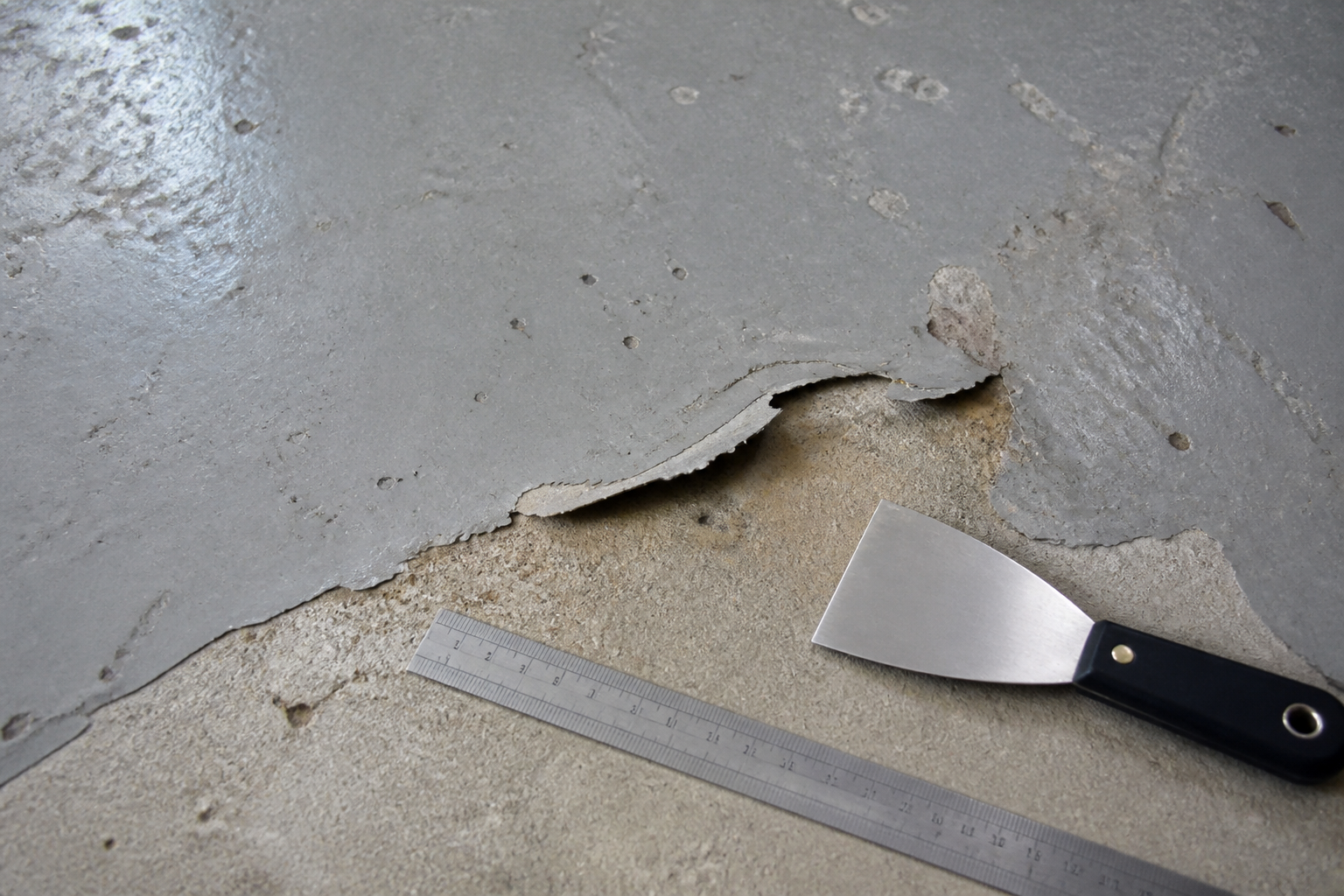
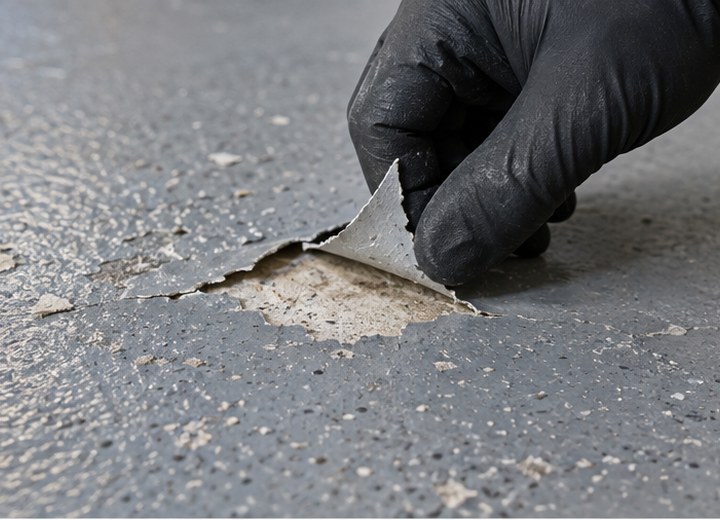
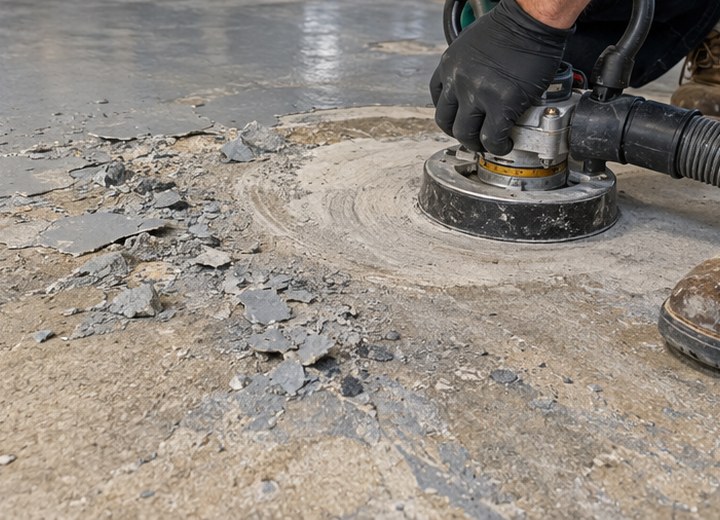
Preparation is about more than scuffing a shiny surface. Areas with loose coating, failing paint or built-up residue usually need to be removed and the underlying concrete assessed. The goal is to avoid building a fresh system on top of something that is already separating from the slab below it.
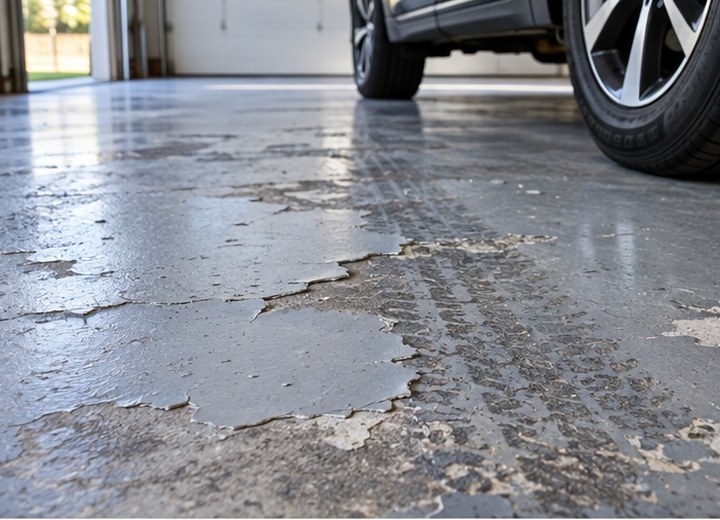
Edges, cracks, hot-tire areas and places where water sits are especially useful clues. If the old coating is lifting in those locations, that can tell us something about the concrete, drainage, previous preparation or the kind of traffic the floor sees. That information belongs in the recommendation instead of being ignored because the rest of the floor looks okay.
A new finish may still be possible after the right preparation, but the scope should be defined honestly. Sometimes the practical path is targeted removal and repair; other times the existing coating needs more complete removal before a new decorative floor makes sense. An on-site look is where that decision becomes clear.
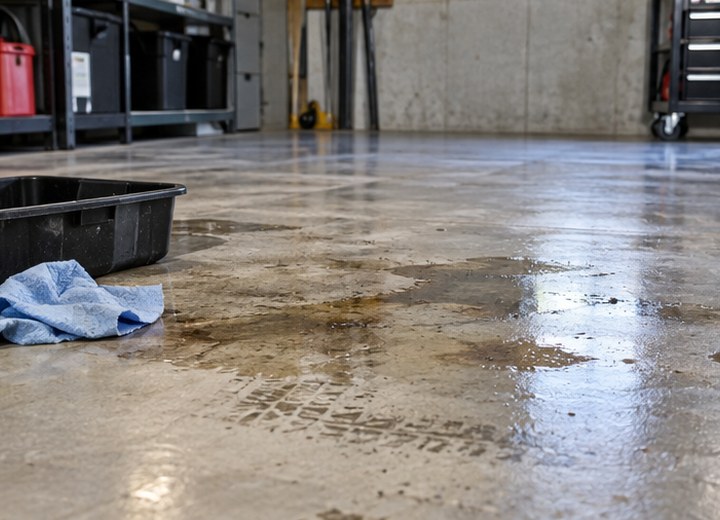
For a useful first conversation, send one wide photo and several close-ups of any peeling, chips, yellowing, tire marks, cracks or unknown patches. Tell us roughly how old the current coating is and how the garage or room is used. That gives us a much better starting point than a single photo of the cleanest corner.