
What matters in practice
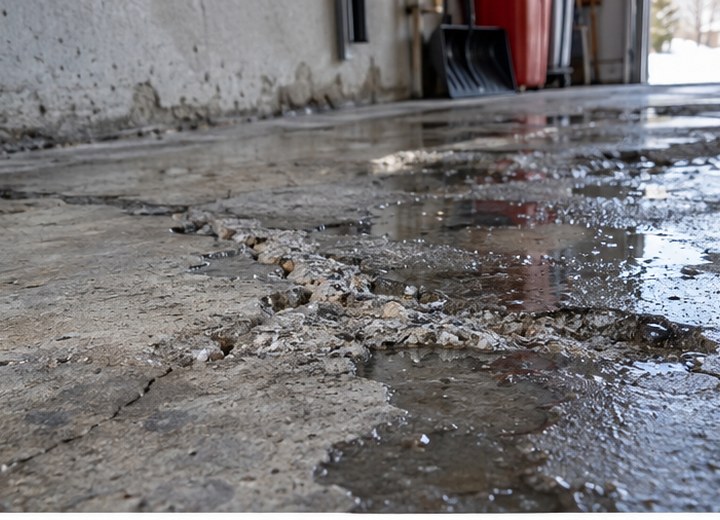
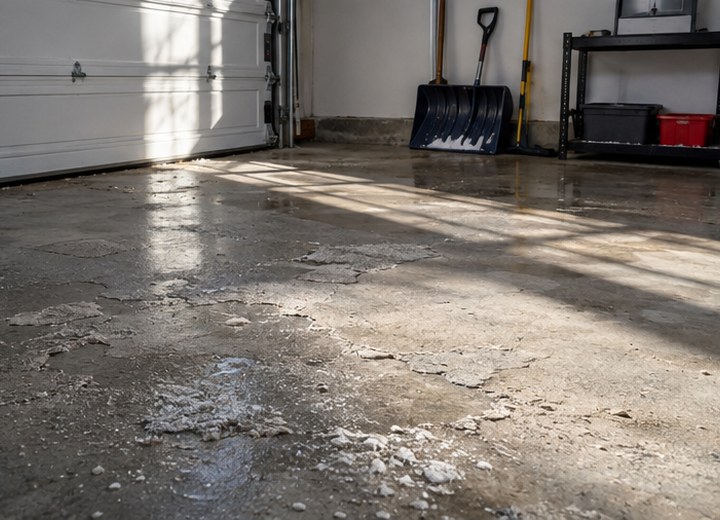
Before a floor is coated, the condition of the concrete needs to be understood. Weak or scaling material has to be mechanically removed, repairs have to be compatible with the system, and areas with chronic moisture need attention before decorative layers are introduced. Coating over loose or contaminated concrete only hides the problem temporarily.
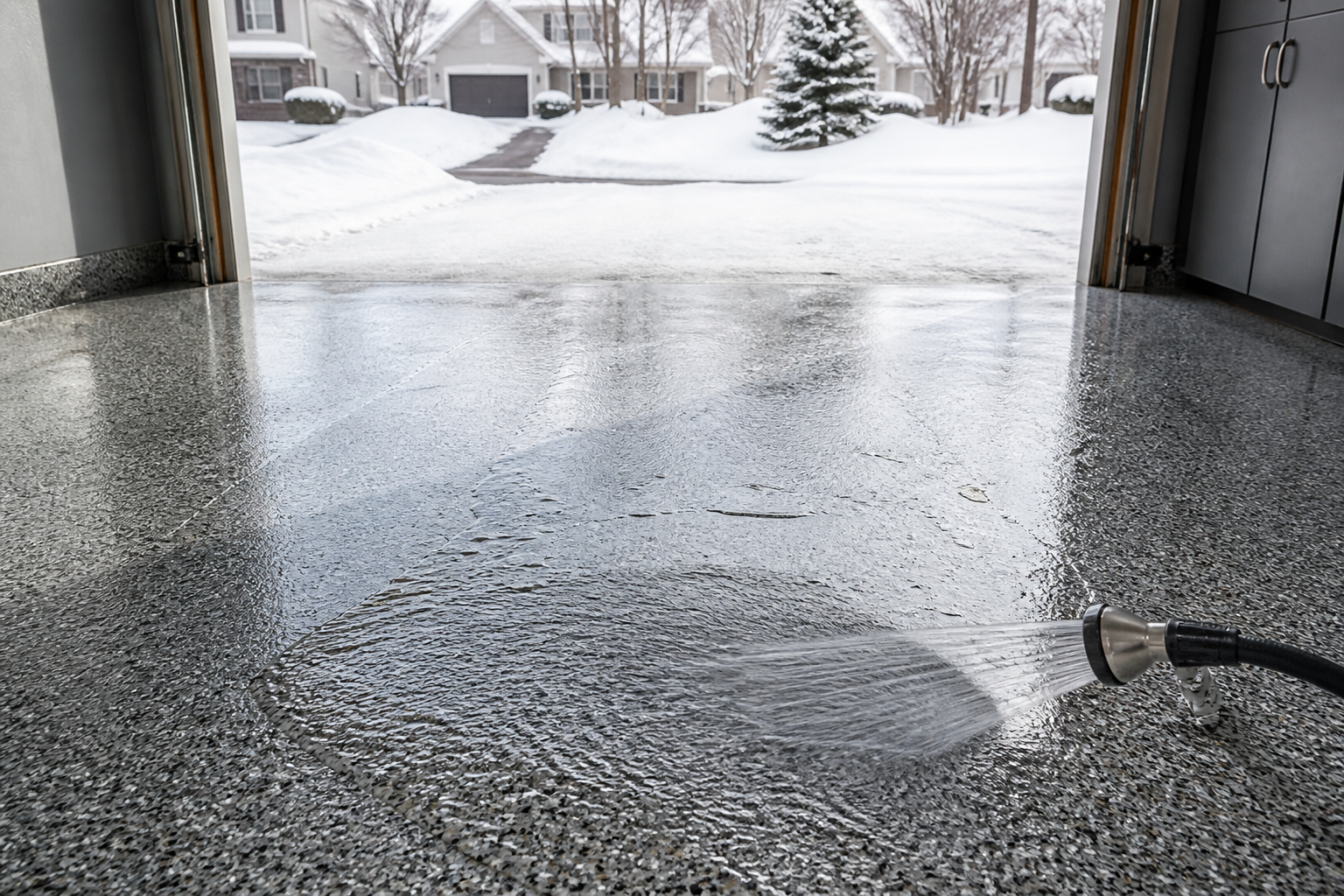
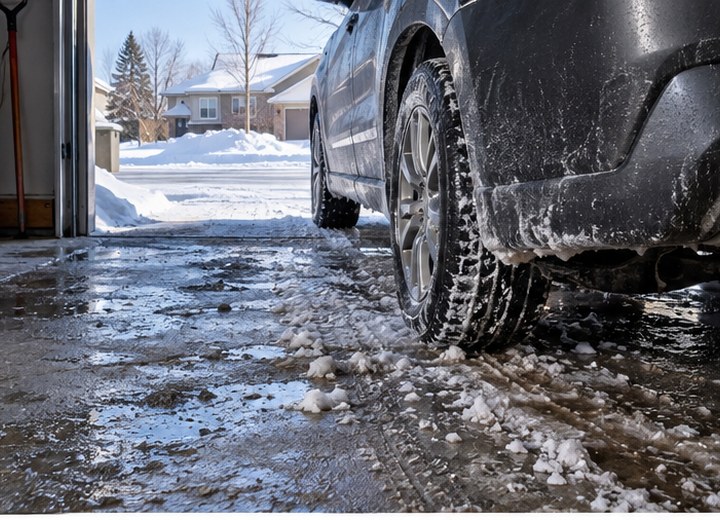
A full-flake surface with the right topcoat is useful in a garage because it creates a continuous, cleanable finish rather than leaving raw concrete to absorb every salt slurry. Texture and topcoat selection can also be discussed around traction, how the floor is cleaned, and the vehicles or equipment that use the room.
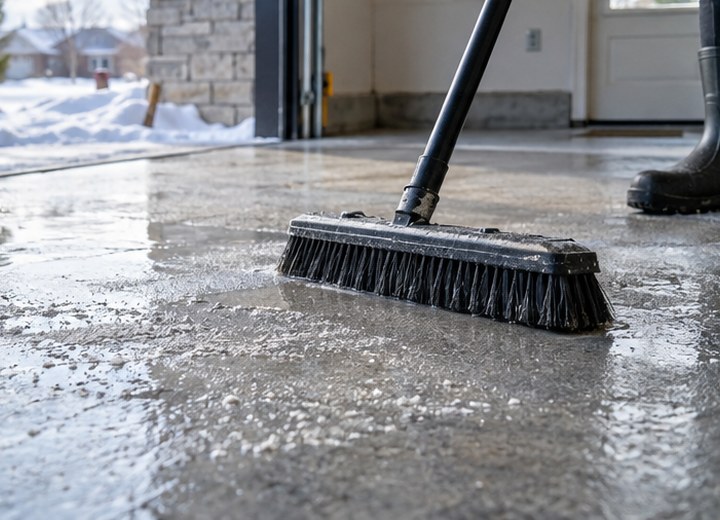
Good habits still matter after installation. Use a soft squeegee or rinse routine when salt accumulates, clean spills before they sit for days, and do not let abrasive debris grind into the finish. The goal is not a fragile showroom floor; it is a system that makes a hard-working garage easier to use and maintain.