Plan your Windsor–Essex floor. Send photos for a quote conversation. Visits by appointment.
PLAN YOUR WINDSOR–ESSEX FLOOR✦SEND PHOTOS FOR A QUOTE CONVERSATION✦VISITS BY APPOINTMENT✦PLAN YOUR WINDSOR–ESSEX FLOOR✦SEND PHOTOS FOR A QUOTE CONVERSATION✦VISITS BY APPOINTMENT✦
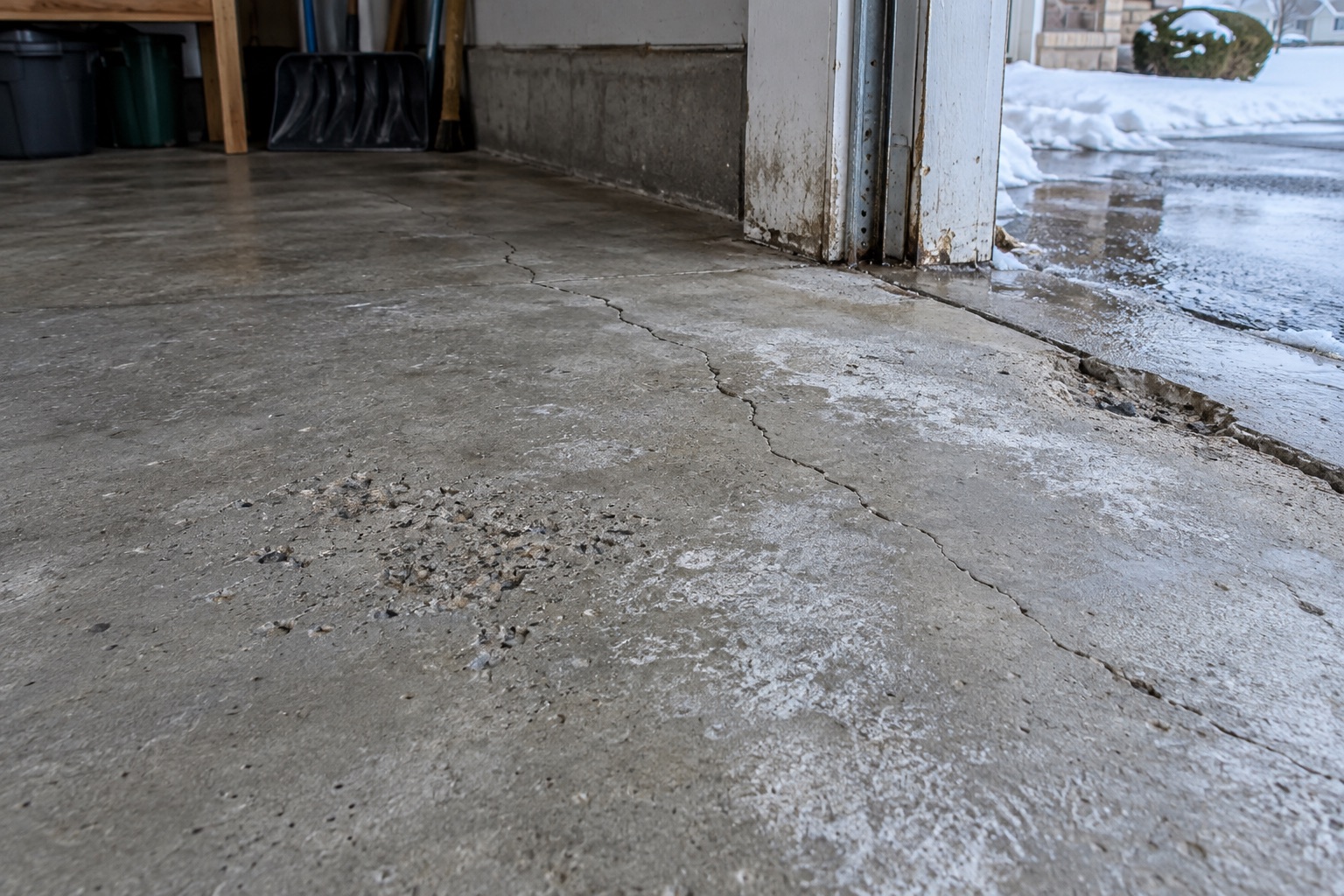
Concrete movement, road salt, trapped moisture, freeze-thaw exposure and hard use can leave different damage patterns that need different repairs.
By Rose City Customs — The Epoxy Lab™
Different damage patterns call for different questions and repairs.
THE 30-SECOND ANSWER
Cracks, pits and scaling are related to the concrete, but they do not all mean the same thing. A narrow stable crack may be a repair detail. A moving joint, vertical displacement or widespread weak surface can change whether a decorative coating is appropriate.
VISUAL GUIDE
Name the damage before planning the repair
These descriptions help organize the first conversation.
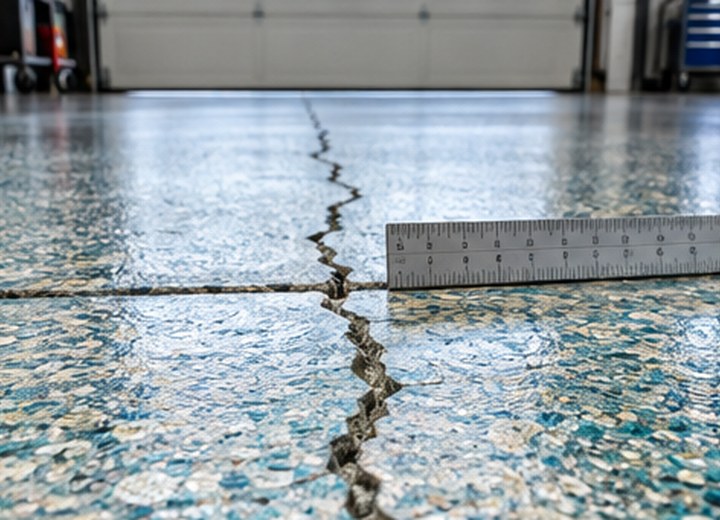
CRACK
A line through the slab
Check width, movement, vertical difference, location and whether it follows a joint.
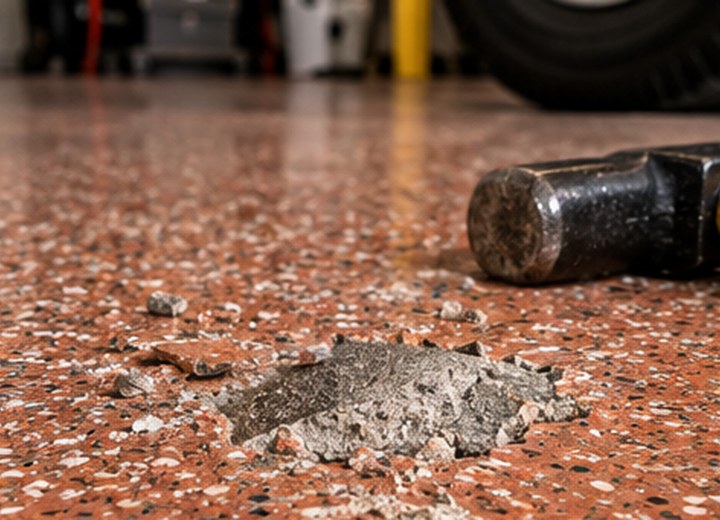
PIT
Small localized loss
Look for impact, abrasion, salt exposure, contamination or previous patching.
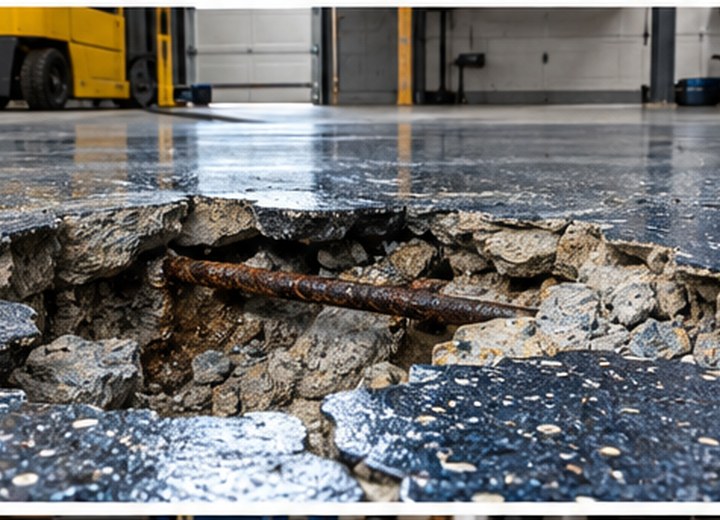
SPALL
Larger broken area
Assess depth, sound edges, embedded metal, water exposure and traffic.
SCALE
Weak surface flaking
Determine how widespread the weak layer is and what sound concrete remains below.
What matters in practice
Winter use adds stress. Vehicles bring in salt and slush, water collects near doors and drains, and exposed concrete can pass through wet and freezing conditions. Weak surface paste may scale away while existing chips and cracks collect more moisture and debris.
Pitting can also come from impact, corrosion around embedded metal, old coating removal or years of abrasion. Grinding exposes the actual limits of weak concrete, which is why a repair scope may become clearer after preparation begins.
A coating can protect a properly prepared and repaired surface, but it cannot stop structural movement or correct drainage by itself. The recommendation should separate cosmetic repair, functional detailing and conditions that need another trade or further investigation.
Photos that make a remote review useful
Photograph the whole garage, then each damaged area from above and from a low angle. Include the threshold, drains and any place water sits so the pattern has context.
COMMON QUESTIONS
Quick answers before you plan.
Can every crack be made invisible?+
No. Stable cracks may be repaired and visually reduced, but moving joints or active slab movement can reflect through a seamless finish.
Does pitting mean the whole slab is bad?+
Not always. The extent and depth matter. Mechanical preparation helps determine how much sound concrete surrounds the damaged areas.
Will coating fix water that pools?+
A coating follows the existing slope. Drainage or slope correction is a separate issue that should be discussed before the finish is installed.